
Mark T.'s Short-Lived ATM Adventure: Lessons in Cloning and Capture
In November 2024, Mark T. thought he was smart by buying cloned cards. Just days later, his plans unraveled quickly due to effective surveillance and investigation.
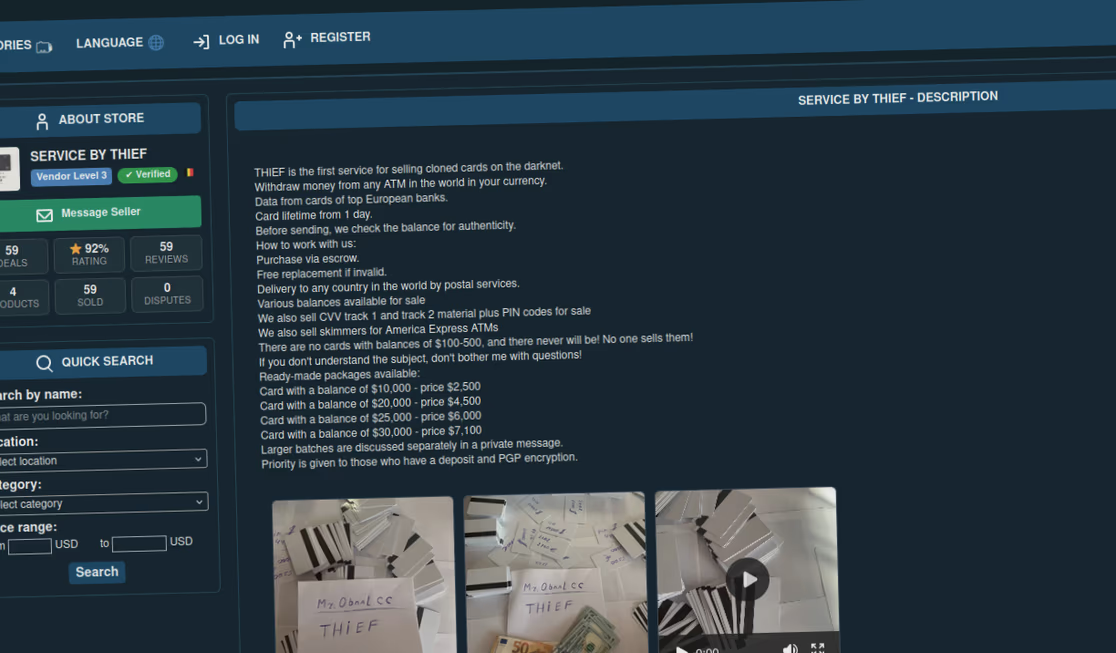
Mark T., a 34-year-old man living in Tampa Bay, Florida, aimed to make quick cash. He purchased six cloned debit cards with matching PIN codes from a darknet site for $480, planning to withdraw cash from ATMs. What he didn’t expect was how swiftly law enforcement would track him down after his withdrawals, leading to a five-year federal prison sentence.
The Mechanics of Carding
Carding represents a type of cybercrime that takes advantage of compromised banking information. Mark's operations involved several essential phases:
- Data Collection: Criminals gather magnetic track information using techniques like skimming devices on ATMs or purchasing data dumps from dark web platforms.
- Card Creation: The next step is transferring this acquired data onto blank cards, creating counterfeit cards with embossed details.
- PIN Retrieval: They often capture PINs through hidden cameras or overlay devices at ATMs, granting them full access for theft.
- Cash Extraction: With the fake cards, criminals withdraw cash from ATMs prior to the victims detecting any fraud.
- Funds Conversion: The final phase involves converting the stolen cash into cryptocurrency, thereby obscuring the transaction trail.
Mark's operation proceeded without a hitch. He purchased six counterfeit debit cards embedded with stolen magnetic tracks for $480. These were acquired from a darknet marketplace using Monero. His withdrawal spree totalled $4,200, successfully cashing out at three ATMs before encountering issues at the fourth. This account highlights both the ease of obtaining cloned cards and the rapid loss of anonymity when confronted with effective surveillance and vigilant financial institutions. The last ATM visit not only ended his cash-out but also illustrated how digital crime collided with undeniable physical evidence.
The Surveillance System Within ATMs
Have you ever thought about how exposed wrongdoers are at ATMs? These machines do more than just dispense money; they help collect vital evidence against offenders.
- Cameras on-site: Most ATMs include a camera focused on the user, capable of capturing high-definition footage, often even in low light.
- Covert cameras: Some versions have extra cameras positioned at unexpected angles, making them difficult to detect.
- Transaction records: Each withdrawal is thoroughly documented, including the time, amount, and card information.
- Location tracking: ATMs can identify their exact positions, which enhances the reliability of data.
- Communication logs: All interactions with the bank's server are logged, which supports investigations.
When Mark approached the fourth ATM, he unwittingly placed himself in view of these cameras. He withdrew $700 without any attempt at disguise, resulting in a clear video capturing his identity. Such evidence is hard to refute. The misconception that anonymity applies in the physical world often misleads criminals. ATMs represent a significant point where anonymity is absent, and this is where Mark's difficulties began.
The Timeline of His Capture
What does a rapid criminal investigation look like? In Mark's case, it unfolded like this:
- On November 1, 2024, three individuals reported unauthorized withdrawals to their banks from North Carolina, Florida, and Georgia. The banks acted swiftly to freeze the affected cards and initiated investigations into the fraud.
- Day 3: By this time, banks had identified a troubling pattern: a rapid series of cash withdrawals made with cloned cards in various states. This alarming finding prompted law enforcement to step in.
- On Day 5, responsibility for the investigation shifted to the U.S. Secret Service, which handles financial crimes. They began examining ATM transaction records and collecting pertinent video footage.
- Day 8: Video evidence from an ATM captured a clear image of Mark. Through his driver’s license, they confirmed his identity, and his local area was connected to the transactions.
- A warrant to investigate Mark's online activities was obtained by investigators on Day 12. This uncovered his involvement with cryptocurrencies and links to illegal websites on the darknet.
- During a search of his home on Day 14, investigators found significant evidence, including six blank cards, a device for reading magnetic stripes, a laptop linked to illegal activities, and $3,200 in cash.
- On Day 15, four of the six cloned cards were used for cash withdrawals, as Mark admitted during his custody. He acknowledged that two of those cards had been deactivated prior to his attempts to use them.
This timeline showcases how effectively modern law enforcement can pinpoint and tackle suspicious activities, particularly through technological advancements. Mark's rapid downfall illustrates the consequences of digital actions manifesting in the physical world.
The Numbers Behind His Arrest
Figures frequently reveal the hidden mechanics behind complex events. Mark’s situation offers a clear illustration of this reality. Let us review the documented figures:
| Service type | Pricing and quantity |
|---|---|
| ATM machine cashouts | 4 payouts |
| Interval from cashing out until detention | 15 days |
| Purchase of cloned debit cards | 480 USD |
| Aggregate funds extracted | 4,900 USD |
| A sentence of 60 months in federal prison was imposed. | |
| A fine and restitution amounting to $22,000 was imposed. | |
| Supervised Release | 3 years |
The severe consequences tied to carding are highlighted by these statistics. Although Mark may have experienced some financial benefits, the repercussions were substantial. His story serves as a warning that pursuing quick cash can result in significant issues.
The Flaws in Mark's Operation
What errors did Mark commit? His actions contained several significant flaws:
- ATM Withdrawal Locations: The four transactions were made within 40 miles of his home, which made fraud detection systems alert.
- Facial Recognition: Mark did not wear any sort of disguise when using the ATM, making him easily recognisable.
- Crypto Purchase Method: He bought cryptocurrency through a KYC-compliant exchange, which directly linked his identity to the purchase.
- Evidence Storage: Keeping incriminating items at his home allowed law enforcement to gather undeniable proof during their investigation.
- Cash Found: Police discovered cash at his residence that closely matched the amounts withdrawn, further indicating his involvement.
- Timely Withdrawals: The rapid nature of his ATM activity attracted significant scrutiny. While delaying the transactions could have slowed detection, his presence on camera would remain problematic.
Mark's situation serves as a reminder of the need for careful planning in unlawful endeavours. His oversights led to the quick downfall of his operation, illustrating that even small mistakes can lead to major repercussions.
Insights for Security Experts
How can cybersecurity professionals learn from Mark's experience? There are several takeaways:
- Importance of Anti-Fraud Systems: Banking institutions’ algorithms help detect suspicious activity through pattern recognition and geolocation. These systems often flag unusual transactions before human involvement.
- Synergy of Digital and Physical Evidence: This case reveals the effectiveness of combining physical evidence, like ATM footage, with digital records. Together, they can build a strong case.
- Limitations of 'Anonymous' Cryptos: Despite their intention, cryptocurrencies like Monero can still be traced back to individuals due to the centralized exchanges requiring identification for transactions.
- Need for Customer Awareness: Victims often delay reporting fraudulent activity, which can result in more significant losses. Education by banks about fraud detection can mitigate damage significantly.
Mark's narrative is not an isolated incident; it serves as a learning experience for security professionals. The importance of vigilance and system efficiency cannot be overstated.
The Final Ruling
In 2025, Mark T. admitted to participating in fraudulent activities and money laundering. His confession resulted in a sentence from a federal court in Florida, leading to a 60-month prison term. After serving his sentence, he will be subject to three years of supervised release. Additionally, he was fined $22,000 and is required to compensate his victims.
During the sentencing, the judge remarked that although Mark was not the mastermind behind the fraudulent operation, he still received substantial penalties. This case underscores the challenges faced by law enforcement. Often, the individuals who orchestrate these schemes evade justice, complicating the fight against cybercrime. Mark's case shows that even those with minor roles can encounter serious legal repercussions.
A Cautionary Tale
Mark's story illustrates the risks associated with the carding world. Modern ATMs possess robust surveillance systems that can capture clear evidence. His quick money-making scheme proved futile when faced with efficient law enforcement. The intersection of digital and physical crime is a dangerous place, and Mark learned that the hard way.
His transactions were linked back to the website where the purchase was made.
Questions readers ask
What is carding?
Carding is the sale and use of stolen banking data, often involving cloned cards.
How do ATMs capture evidence?
Modern ATMs have built-in and hidden cameras, recording transactions and user information.
What mistakes did Mark make?
Mark made several mistakes, including using centralized exchanges for crypto and failing to disguise himself.
What are the penalties for carding?
Penalties can include lengthy prison sentences, fines, and restitution to the victims.